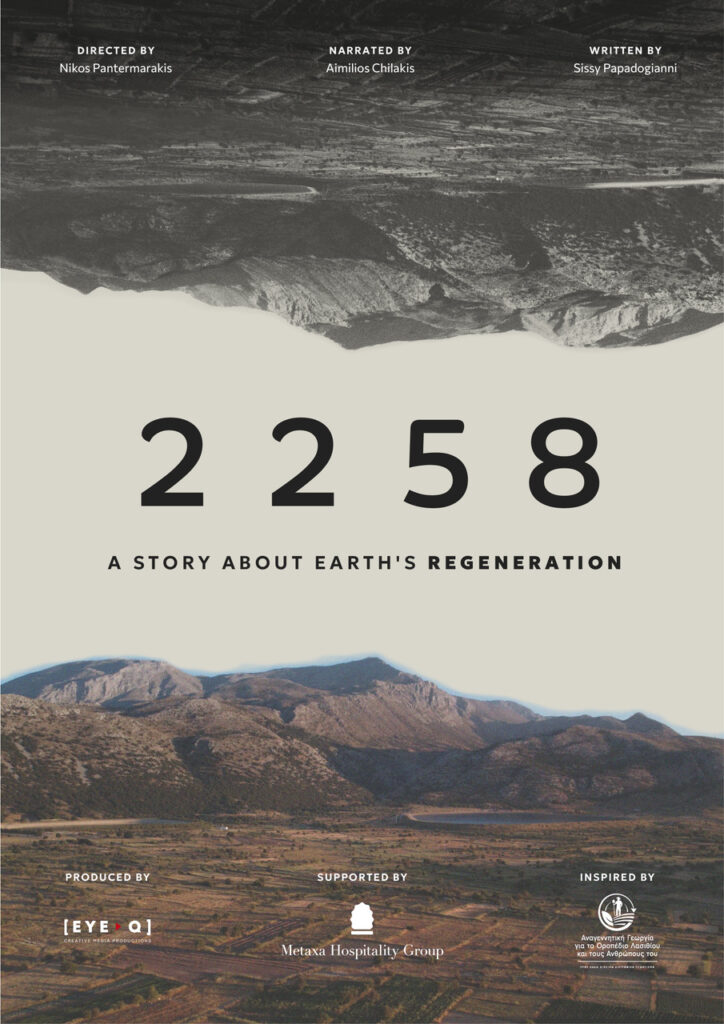


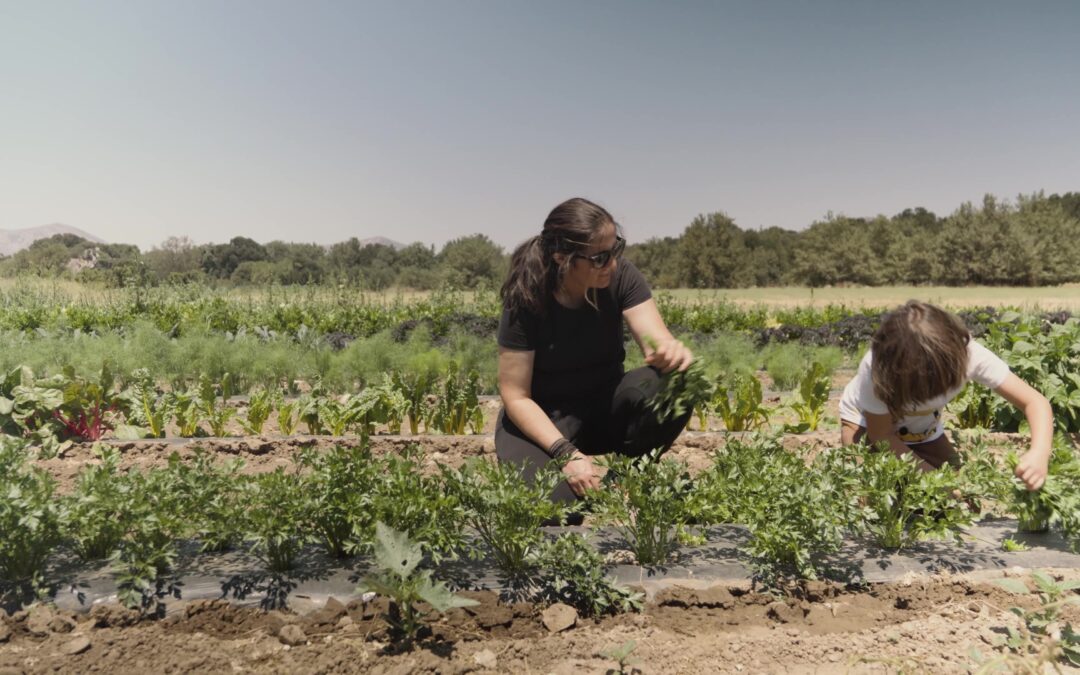
At a time when climate change, food insecurity, and environmental degradation dominate global debate, the documentary 2258: A Story of Earth’s Regeneration offers a research-driven perspective on one of humanity’s most overlooked resources: soil.
Filmed primarily in Crete and directed by Nikos Pantermarakis and written by Sissy Papadogianni, the documentary brings together farmers, scientists, and international experts to explore how land is degraded and how it can be restored. At its core lies the work of climate and environmental scientists, including University of Crete (UoC) professors, whose research provides the documentary’s analytical foundation.
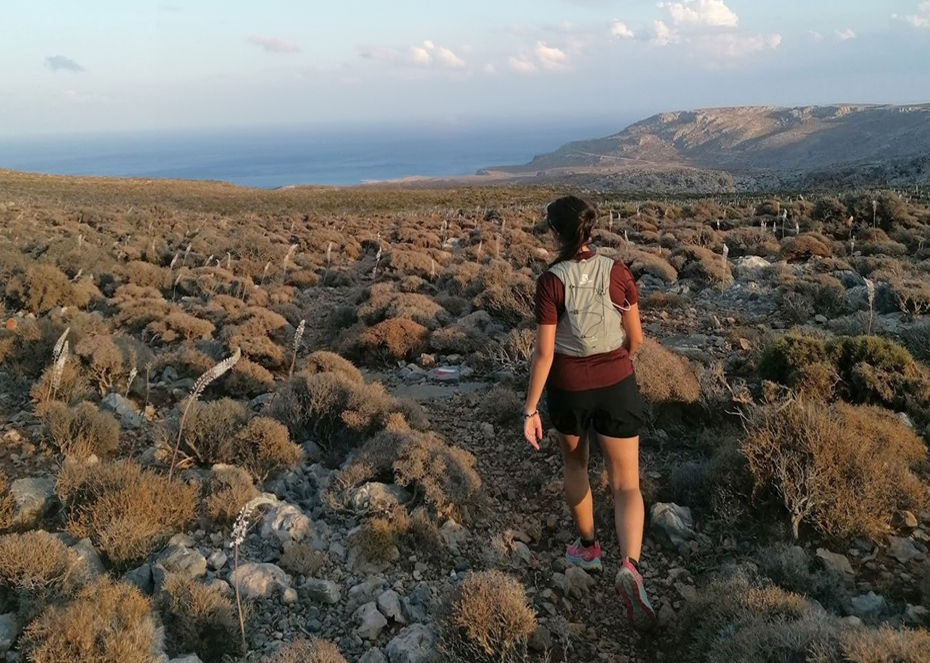
The title 2258 refers to the population of the Lasithi Plateau in eastern Crete, where farmers are transitioning to regenerative agriculture. This approach promotes minimal soil disturbance, protection of microorganisms, improved water retention, reduced erosion, and the use of cover crops. Rather than treating soil as an expendable resource, it is understood as a living system with ecological, economic, and social value.
Professor Panagiotis Sarris (UoC Department of Biology) examines how soil degradation directly affects global food security. His contribution highlights structural inequalities in food systems, contrasting overconsumption in the Global North with persistent hunger elsewhere. He also addresses how climate change accelerates the emergence of new and more aggressive plant pathogens, reshaping agricultural risk.
Professor Emeritus Euripides Stephanou, former Rector of the University of Crete, contributes critical insights into pesticide exposure and long-term health impacts. Drawing on the REA study, an ongoing longitudinal project following 1,500 mother–child pairs in the Heraklion area since 2007, he presents evidence of significant environmental exposure. Notably, the study identifies high concentrations of the banned pesticide DDT in both mothers and children, at levels exceeding those recorded in other European countries and the United States, raising serious concerns about public health and environmental practices.
Professor Nikolaos Mihalopoulos (UoC Department of Chemistry), Director of the Institute of Environmental Research and Sustainable Development at the National Observatory of Athens, situates Crete within the broader climate crisis. He identifies the island as a climate “hot spot,” where temperatures are rising at approximately twice the global average. These changes disrupt the hydrological cycle, reduce soil moisture, and intensify erosion and drought, threatening the resilience of Mediterranean ecosystems.
Filming took place not only in rural landscapes but also in academic environments, including the University of Crete Library in Voutes Campus and laboratories in the Department of Chemistry, underscoring the university’s role as a hub where scientific research intersects with real-world challenges.
2258: A Story of Earth’s Regeneration will soon be available on festival and screening platforms.
Trailer: https://www.youtube.com/watch?v=ARccVhHtkfU&t=3s
*The film is an independent production by EyeQ Creative Media, created with the support of Metaxa Hospitality Group. It is inspired by the program “Regenerative Agriculture for the Lasithi Plateau and its People | Toward a Sustainable Food Destination.”